ByJohn A
Benefits of Effective Cloud Governance
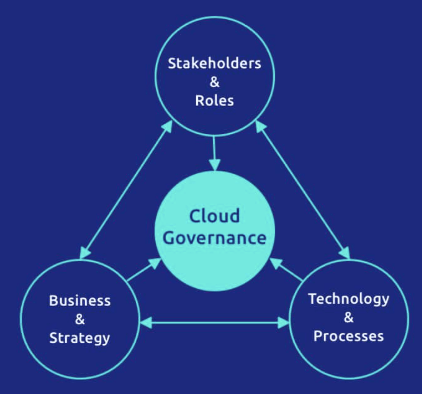
Effective cloud governance aligns initiatives with business goals, establishing transparent metrics and disciplined decision-making. It clarifies ownership, standardizes reporting, and enforces control without stifling momentum. By linking cost visibility to strategic priorities, it enables informed trade-offs and portfolio optimization. Policy-driven controls strengthen security and compliance while supporting rapid yet resilient adoption. The balance of agility and governance creates guardrails that sustain value across cloud domains, inviting stakeholders to push forward with confidence.
Why Cloud Governance Drives Business Alignment
Cloud governance acts as the mechanism that links cloud initiatives with business objectives, ensuring every cloud decision supports strategic priorities and measurable outcomes.
In this view, alignment strategy becomes a structural discipline, guiding portfolio choices and risk appetite.
Governance metrics provide transparent performance signals, enabling executives to validate progress, sustain autonomy, and harmonize rapid experimentation with enduring value creation across the enterprise.
How Governance Improves Cost Visibility and Control
Effective governance enhances cost visibility and control by establishing standardized measurement, accountability, and reporting across cloud domains.
The approach promotes cost transparency, cloud cost visibility, and robust expenditure tracking, enabling precise budget control and informed cost management.
Governance impact is realized through usage analytics, financial governance, and disciplined expenditure governance, driving accountability, optimized allocations, and sustainable, freedom-minded financial stewardship in cloud environments.
See also: mtsnews
Strengthening Security and Compliance Through Policy
Strengthening security and compliance through policy builds on the governance framework that already delivers cost visibility by codifying rules, responsibilities, and accountability across cloud domains. This approach elevates the security posture through explicit controls, policy-driven enforcement, and continuous monitoring. It aligns with compliance standards while preserving operational autonomy, enabling informed risk decisions and a disciplined, freedom-loving organization with measurable risk reduction.
Enabling Faster Adoption and Resilient Operations
A strategic, governance-minded approach enables faster adoption and resilient operations by balancing agility with control. The framework identifies adoption acceleration levers, aligning cloud initiatives with strategic outcomes while maintaining risk boundaries.
Through resilience engineering, systems are designed for graceful failure and rapid recovery, enabling teams to innovate confidently.
Clear guardrails, metrics, and feedback loops sustain momentum without compromising governance or stability.
Frequently Asked Questions
How Do Governance Frameworks Scale Across Multi-Cloud Environments?
Governance frameworks scale across multi-cloud environments through standardized policies and automated controls, ensuring consistent risk management, cost oversight, and security posture, while enabling freedom to innovate within defined boundaries, deliberate accountability, and interoperable, vendor-neutral governance architectures. two word idea, two word idea.
What Metrics Best Indicate Governance Maturity Over Time?
Data ownership and governance maturity are best indicated by policy adherence, risk reduction metrics, and lineage visibility. They measure progress over time, revealing governance maturity with controlled access, consistent controls, and proactive data stewardship—allowing strategic freedom within disciplined boundaries.
How Is Data Ownership Defined in Governed Cloud Ecosystems?
Data ownership in governed cloud ecosystems is defined as accountability for data accuracy, access, and protection, held by designated owners; data stewardship complements this by overseeing quality, lineage, and usage policies, ensuring strategic control, compliance, and freedom to innovate.
What Role Do Cultural Changes Play in Governance Adoption?
In an allegorical loom, culture shift steers governance adoption, where Change management threads align with policies; Innovation fueling futures, Collaboration empowerment keys unlock participation, and disciplined culture sustains agile decisions, enabling free yet strategic cloud governance for all stakeholders.
How Can Governance Support Innovation Without Slowing Teams?
Governance supports innovation by establishing deliberate innovation constraints and risk budgeting, enabling teams to operate with clarity and autonomy; it directs experimentation, reduces friction, and preserves strategic objectives while empowering rapid, compliant delivery within bounded parameters.
Conclusion
In sum, effective cloud governance aligns initiatives with strategic objectives, delivering precise cost visibility, disciplined spending, and transparent metrics. It tightens security and compliance through enforceable policies, while balancing risk with agility to accelerate adoption and resilience. By embedding guardrails and feedback loops, governance sustains enterprise value across cloud domains and supports informed decision-making. The result is a disciplined, competitive advantage: governance is not restraint but a strategic engine—guiding risk-aware innovation toward measurable, lasting outcomes.